|
|
Cathedral Gorge State Park
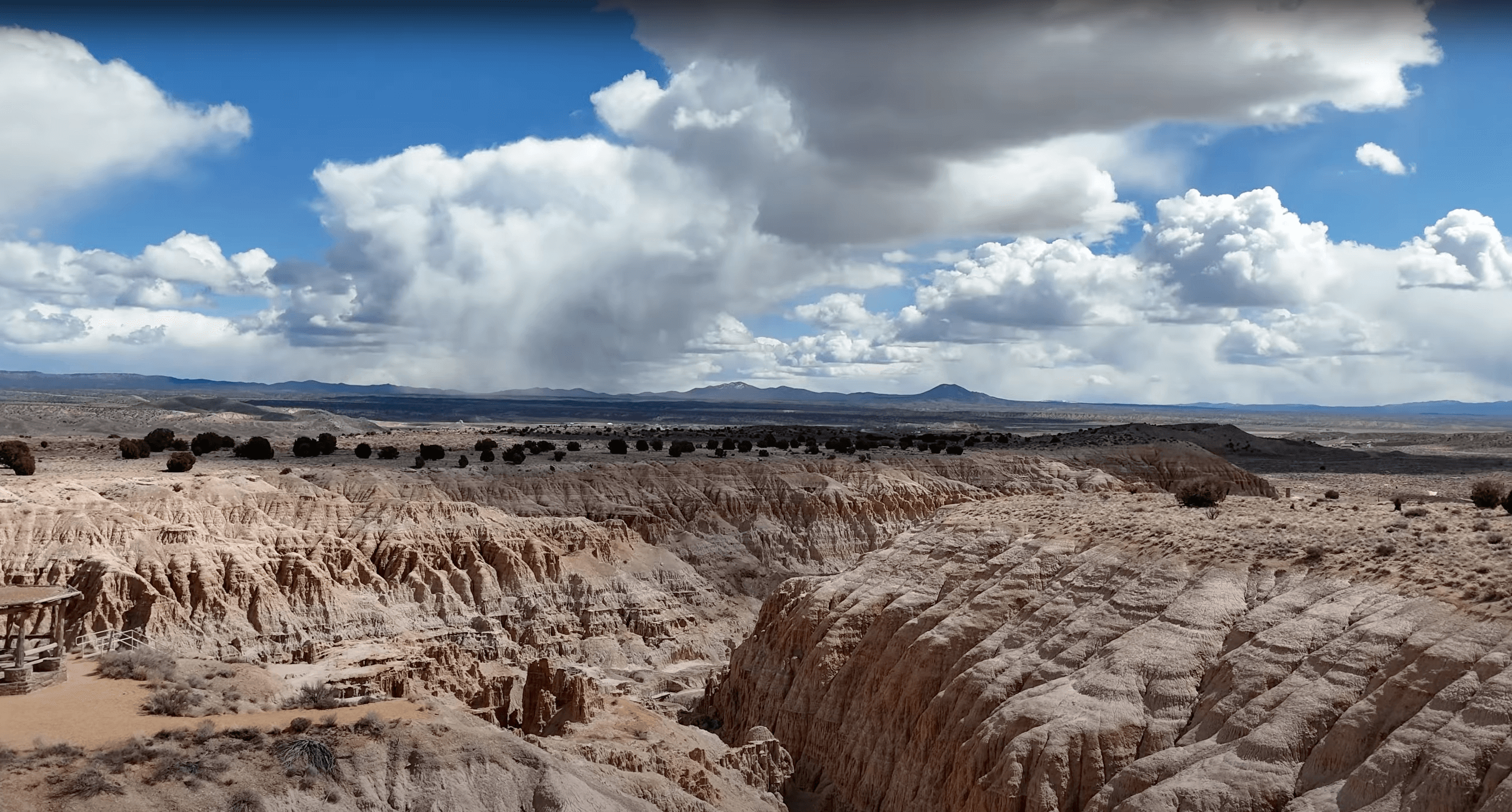
Cathedral Gorge is located in a long, narrow valley where erosion has carved dramatic and unique patterns in the soft bentonite clay. Trails abound for exploring the cave-like formations and cathedral-like spires. Miller Point, a scenic
overlook just north of the park entrance on U.S. 93, offers excellent views
of the scenic canyon. Shaded picnic areas and a tree-shaded campground
area are open all year. Hiking, picnicking, camping, nature study, photography
and ranger programs are the most common activities at the park.P.O. Box 176 Panaca, NV 89042 (775) 728-4460 cathedralgorge_vc@lcturbonet.com
A Regional Visitor Center is located at the entrance to Cathedral Gorge,
offering interpretive displays and information about all of eastern Nevada
and seven state parks. The park and visitor center is located just west
of U.S. 93, two miles north of Panaca.The area is typically arid with hot summers and cold winters. Summer temperatures range from 95F at mid-day to 55F at night. Rainfall is variable and thunderstorms are common. Cathderal Gorge was runner-up in the Best of Nevada 2009 survey.
Facilities & Amenities |
|
Park Origin & History Nomadic Native Americans occupied this area as long ago as 10,000 B.C. The Fremont, Anasazi and Southern Paiutes used the area for seasonal hunting of local game and gathering of edible plants. There is no evidence of any permanent settlements. The town of Panaca was settled by Mormon pioneers in 1864. They were attracted to the area by abundant water resources which allowed agricultural crops and livestock to flourish. The discovery of silver ore near Panaca led to the establishment of Bullionville in 1869. Some remnants of the town are still visible east of the main park entrance. The Bullionville Cemetery is located just north of the park entrance, off US Highway 93. During the 1920s, with increased leisure time and the advent of automobiles, Cathedral Gorge was popular for picnicking and hiking. Open-air plays and "vaudevilles" were given with the spires and canyons as backdrops. In 1924, Governor James Scrugham visited the area and began the process of acquiring the land from the Federal government. In 1935, Cathedral Gorge became one of Nevada's first four state parks. The Civilian Conservation Corps developed early picnic and camping facilities, some of which are still in use. The stone water tower and several structures in the picnic area were built by the C.C.C. Facilities: Sight-seeing and relaxing outdoors are the main attractions at Cathedral Gorge. The Miller Point Overlook has outstanding views of buff-colored canyons, cliffs and spires. Camping: All camping is on a first-come, first-served basis. Fees are charged per vehicle and are payable in the campground. The campground has 22 developed sites, each with table, grill and shade ramada. Water and a flush restroom with showers are available. Picnicking: The C.C.C. Day Use Picnic Area offers a large shade ramada with three picnic tables. The overhead ramada and restroom were built by the C.C.C. Group Use: Accommodations for day and overnight groups are available by reservation. Facilities are located adjacent to the campground. The group areas offer large overhead ramadas, grills, picnic tables and water. Please contact the Regional Office(adjacent to the Regional Information Center) for reservation information. Trails: Visitors can access the remote portions of the park via a 4-mile loop trail. Another 1-mile trail connects the Miller Point Overlook to the C.C.C. Picnic Area. Motorized vehicles are not permitted on these trails. User Fees: Fees are charged for entrance and camping. Current fee schedules are posted in the park. Click here for all individual park fees by region Regional Information Center: The Regional Information Center is open from 9:00 am to 4:00 pm daily and is located at the main entrance to the park off US 93. Cathedral Gorge is located 1 mile north of the intersection of US Highway 93 and State Route 319. The park sits at an elevation of 4,800 feet and is open year-round. The area is typically arid with hot summers and cold winters. Summer temperatures range from 95F at mid-day to 55F at night. Rainfall is variable and thunderstorms are common. Geology The buff-colored cliffs and canyons of Cathedral Gorge, called the Panaca Formation, are remnants of a Pliocene-era lakebed. About one million years ago, much of Meadow Valley (the area along US 93 from Caliente to Panaca) was covered by a freshwater lake. Sediments and gravel settled on the lake floor. As the climate changed over centuries, the lake gradually drained, and erosion started working on the exposed sediments. Rainwater and melting snow carved rivulets in the siltstone and clay shale, working their way down and widening the cracks into gullies and canyons. The "caves" area designated on the east side of the Gorge are not true caves but the canyon walls narrow down so much that explorers feel like they are in caves. Erosion is a constant process and also occurs through the actions of freezing and thawing, heat expansion and contraction, and evaporation of moisture from deep within the rock. Visitors hasten erosion by driving off the roads; tire tracks compact soil and create new places for water to run. Once compacted, soils cannot recover, and gullying takes place. This is why off-road driving is prohibited in the park. Remnants of the Panaca Formation may also be seen south of Panaca, on the east side of Meadow Valley. Vegetation The park's different soil types permit various plant associations to grow. The "badland" clay below the eroded escarpment does not permit many plants to take root since the clay is constantly eroding away. Small sand dunes are held in place by many kinds of wildflowers and grasses, like dune primroses and Indian rice grass. In the middle of the valley, clay, sand, and gravel have mixed to a loamy soil that is conducive to narrowleaf yucca, juniper trees, barberry sagebrush, greasewood, "white sage," shadscale, and four-winged salt-bush. Rabbitbrush grows in disturbed areas such as roadsides and walkways. Several non-native species of trees have been planted at the campground and group use area to provide shade. Few cactus species grow in areas of climate extremes such as Cathedral Gorge, where temperatures may fall below freezing in the winter or rise above 100F in the summer. Wildlife Small mammals predominate in the park: black-tailed jack-rabbits and cottontail rabbits, coyote, kit foxes, skunks, packrats, kangaroo rats, mice and even gophers. Deer browse in the area around Miller Point and many venture into the Gorge during the late fall and winter. Several species of nonpoisonous lizards and snakes are abundant, and in the summer, the Great Basin rattlesnake may be found. Birds are common, around the campgrounds and in shrubby areas. Park residents include ravens, kestrels and small hawks, roadrunners, sapsuckers, robins, black-throated sparrows, finches, blackbirds, and starlings. Migratory birds include tanagers, cedar waxwings, warblers, bluebirds, and hummingbirds. An updated list of wildlife is available at the Regional Information Center. Reminders: Park rules and regulations have been established for your safety and the protection of this fragile and beautiful desert environment. To make your visit and the visit of others more enjoyable, please observe the following:
You are responsible for knowing all park rules and regulations, which are posted in the park. |
|
Back to State Parks Image Map Return to State Parks Home Page |